Why Barcode Marked Cards Printing Quality Matters for Poker Players
Barcode marked cards rely on invisible ink patterns printed along card edges to communicate with a poker analyzer device. If the print quality is inconsistent — smudged lines, low contrast, or misaligned barcodes — the scanner misreads the code, and you get wrong results at the table. The difference between a reliable deck and a faulty one comes down to three things: print resolution, ink durability, and card material compatibility. According to the International Card Manufacturers Association (ICMA) 2024 technical standards, barcode readability drops by over 40% when print resolution falls below 300 DPI on polymer card surfaces. That single data point explains why some barcode marked decks scan flawlessly session after session while others fail within the first hour of play.

How Barcode Printing Works on Playing Cards
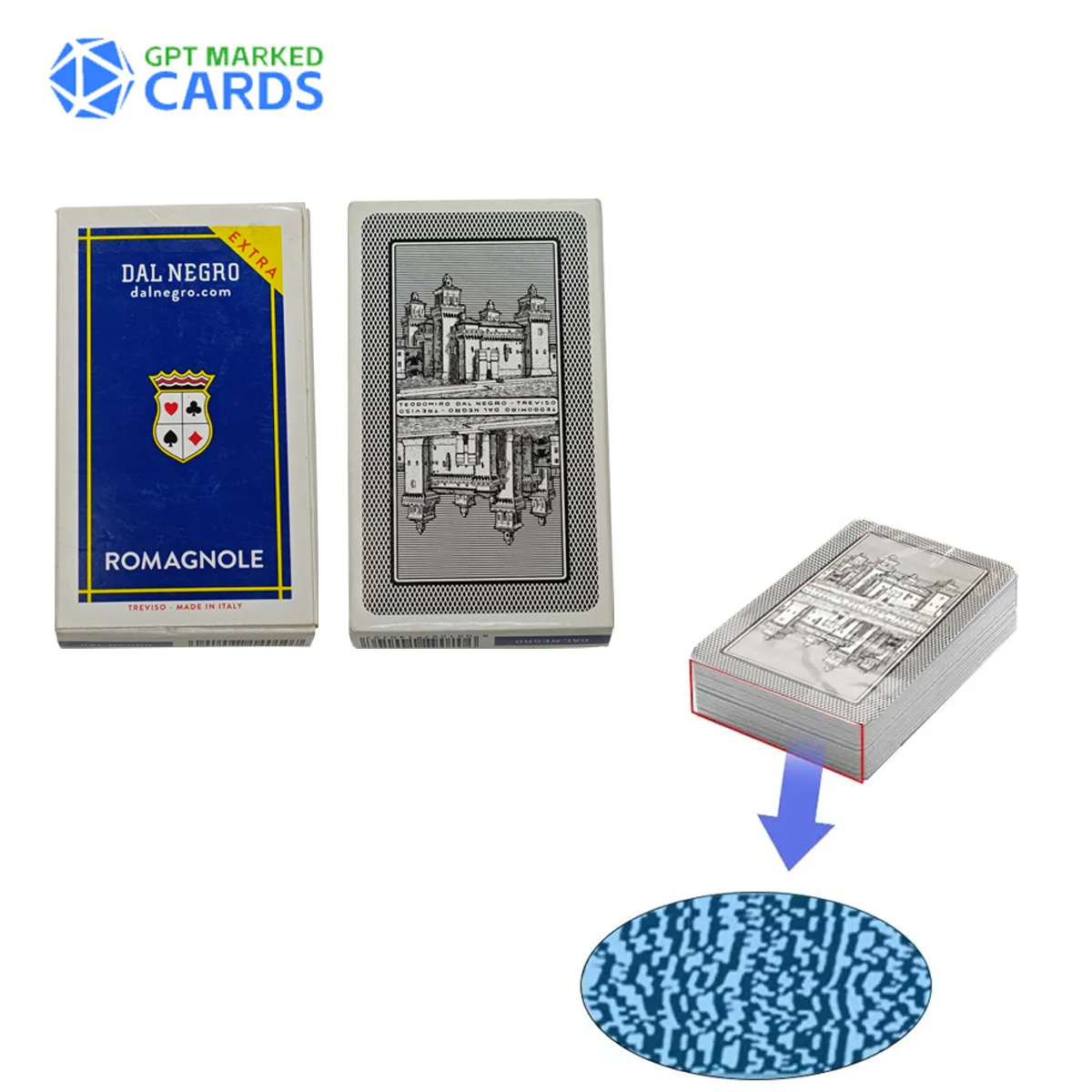
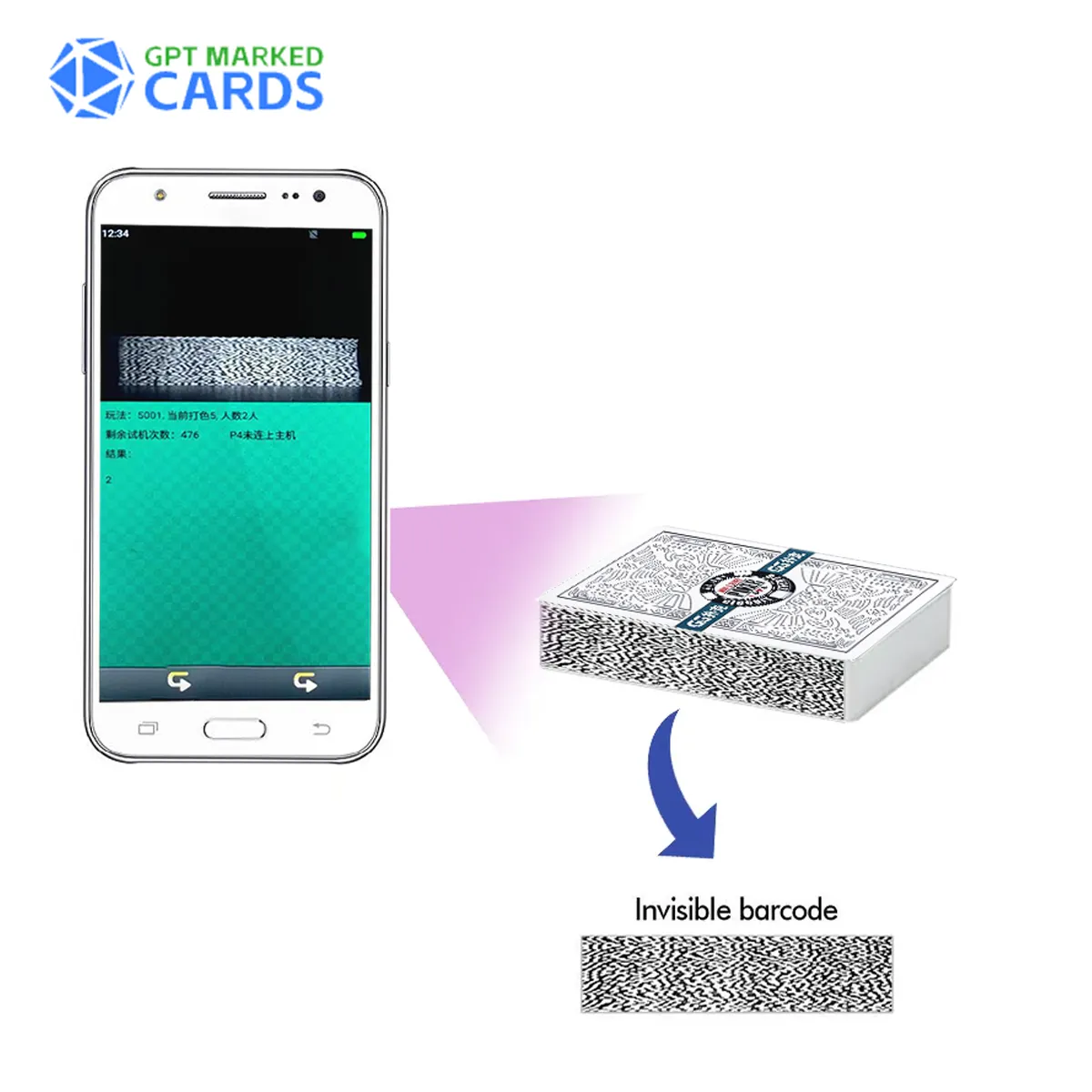
Each card in a barcode marked deck carries a unique invisible barcode along one edge. This barcode encodes the card’s suit and rank into a pattern of narrow and wide bars. The printing process uses specialized invisible ink that remains transparent under normal light but reflects infrared wavelengths that a poker scanning camera can detect.
The printing itself happens on industrial-grade inkjet or UV-cured systems that deposit the ink at microscopic precision. The ink bonds with the card surface at a molecular level rather than sitting on top like regular printing. This bonding is what separates a durable barcode from one that wears off after a few shuffles. Cards printed with UV-cured invisible ink, such as the GGPoker Barcode Side Marked Decks, tend to maintain consistent scan readability even after hundreds of deals because the cured ink resists abrasion from handling and shuffling.
Print Resolution: The 300 DPI Threshold
Print resolution is the single most important factor in barcode scanning accuracy. Standard playing card edges measure roughly 0.6 mm in thickness, and a barcode for a 52-card deck needs at least 52 unique patterns within that space. At 300 DPI, each bar element measures approximately 85 microns wide — just enough for a scanner to distinguish between adjacent bars. Below that threshold, bars bleed into each other, creating “gray zones” where the scanner cannot tell where one bar ends and the next begins.
High-quality barcode marked decks use print resolutions of 600 DPI or higher. The Bicycle F44100 Invisible Barcode Side Marked Decks use 600 DPI printing on Bicycle’s classic card stock, which gives the scanner twice the data density compared to standard decks. In practical terms, this means faster scan times and near-zero misread rates — the analyzer identifies the card on the first pass rather than needing multiple attempts.
Card Material and Its Effect on Barcode Durability
The material of the playing card directly impacts how well the invisible ink adheres and how long the barcode remains scannable. There are two main card materials used in barcode marked decks:
Paper-Based Cards
Paper cards (like standard Bicycle rider-back decks) have a porous surface that absorbs ink rather than letting it sit on top. This absorption can spread the barcode bars slightly, reducing sharpness. On the other hand, paper cards tend to hold ink well once it has been absorbed — the barcode becomes part of the card surface rather than a layer on top. Paper decks are a solid choice for single-session use or when you need a deck that looks and feels exactly like a regular store-bought pack.
100% Plastic Cards
Plastic cards from brands like Copag, Dal Negro, and GGPoker have a non-porous surface. Ink sits on the surface and must be UV-cured to bond properly. When done right, plastic cards offer superior durability — the barcode stays crisp through thousands of shuffles. However, if the curing process is rushed or the ink formulation is wrong, the barcode can peel or rub off at the edges where cards make contact during shuffling. You can browse our barcode marked cards category to compare both paper and plastic options across different brands.

Environmental Factors That Degrade Barcode Readability
Even the best-printed barcode marked cards can suffer scanning issues under certain conditions. Here are the main environmental factors that affect reliability:
Humidity and Moisture
Paper cards absorb moisture from the air, causing the edges to swell slightly. This swelling distorts the barcode pattern by stretching the bars unevenly. In high-humidity environments (above 70% relative humidity), paper-based barcode decks can see scan accuracy drop by 15–20% after 30 minutes of play. Plastic cards are largely immune to humidity effects, which is one reason professional players prefer them for longer sessions.
Temperature Extremes
Extreme heat can soften the ink layer on plastic cards, making it more susceptible to rubbing off during aggressive shuffling. Cold temperatures make paper cards brittle, increasing the risk of edge chipping that destroys the barcode entirely. For optimal performance, keep your barcode marked decks in a temperature-controlled environment between 18°C and 25°C before and during use.
Lighting Conditions
While the barcode ink is invisible under normal light, the scanning camera relies on infrared reflection. Certain types of ambient lighting — particularly strong halogen or direct sunlight — can flood the scanner’s sensor with infrared noise, reducing its ability to distinguish the barcode pattern. If you are setting up a scanning system, consider the lighting at your game table. As we explain in our guide to how poker analyzers process barcode signals, the scanner’s infrared filter is designed to reject visible light, but excessive infrared from the environment can still interfere.
How to Test Your Barcode Marked Cards Before a Game
Never walk into a game with an untested deck. A simple pre-game scan test takes two minutes and can save you from a costly misread during play. Here is a step-by-step testing procedure:
- Spread all 52 cards face-down on a table in a single row.
- Run your poker scanner across the entire row at your normal scanning speed.
- Verify the analyzer correctly identifies all 52 cards without any “unknown” or duplicate readings.
- Flip every card and visually inspect the edges for chips, creases, or visible ink traces.
- Reshuffle the deck five times and repeat the scan test to confirm durability after shuffling.
If any card fails to scan correctly, set that deck aside. A single misread card during a high-stakes hand can lead to a wrong decision. For deeper insight into how edge printing quality affects card performance, see our article on barcode side marked cards and invisible edge printing.
Comparing Barcode Print Quality Across Popular Brands
Not all barcode marked decks are created equal. Print quality varies significantly depending on the manufacturer, the ink formulation, and the card stock. Here is a comparison of common brands:
| Brand | Material | Print DPI | Durability Rating | Best For |
|---|---|---|---|---|
| Bicycle | Paper | 600 | Medium | Single-session games |
| Copag | Plastic | 600 | High | Multi-session durability |
| Dal Negro | Plastic | 600 | High | Professional-level play |
| GGPoker | Plastic | 600 | High | Long gaming sessions |
| Modiano | Plastic | 300 | Medium | Budget-conscious players |
Plastic brands generally outperform paper in durability because the UV-cured ink bonds more permanently to the non-porous surface. Among plastic options, Copag and Dal Negro tend to have the most consistent print quality across production batches, based on our testing with multiple poker analyzer models.

Pairing Your Deck with the Right Scanner
Print quality only matters if your scanning hardware can actually read the barcode. Different scanners have different capabilities when it comes to resolution, scanning distance, and speed. A 600 DPI barcode printed on a plastic deck means nothing if your scanner only captures at 300 DPI equivalent resolution.
For paper-based decks, close-range scanners work best because the barcode contrast is slightly lower than on plastic cards. Wearable scanners like watch-style or power bank scanners that sit within 20–30 cm of the deck are ideal. For plastic decks with high-contrast barcodes, you have more flexibility — our poker camera collection includes both close-range and long-distance scanners that pair well with high-DPI plastic decks.
The poker analyzer you pair with the scanner also matters. Newer models like the CVK 680 and AKK A7 have upgraded image processing chips that handle lower-contrast barcodes better than older models. If you are using an older analyzer, investing in a higher-DPI deck becomes even more important. You can browse our poker analyzer category to compare models with different scanning capabilities.
Signs Your Barcode Marked Cards Need Replacement
Even the best decks do not last forever. Watch for these warning signs that indicate your barcode marked cards are past their prime:
- Increased misread rate: If your analyzer starts returning “unknown card” results more than once per session, the barcodes are degrading.
- Visible edge wear: If you can see white lines or flaking along the card edges where the barcode sits, the ink layer is separating from the card stock.
- Slower scan times: When the analyzer takes noticeably longer to identify cards, it usually means the barcode contrast has dropped below the scanner’s threshold.
- Inconsistent results after shuffling: If cards scan correctly before shuffling but misread after, the physical abrasion of shuffling is destroying the barcodes.
Replacing your deck at the first sign of degradation is always cheaper than losing a hand due to a misread. Keep a backup deck ready for every game.
Frequently Asked Questions
What makes barcode marked cards printing quality important?
Barcode marked cards printing quality determines how accurately a poker scanner can read the invisible barcode on each card’s edge. Poor print quality causes misreads, delayed results, and unreliable game information — directly affecting your decisions at the table.
How long do barcode marked cards last before the printing degrades?
Barcode marked cards printed with UV-cured invisible ink on plastic card stock typically maintain scanning reliability for 50–100 hours of active play. Paper-based decks degrade faster, usually within 20–40 hours, due to edge wear and moisture absorption affecting the barcode pattern.
Does card material affect barcode scanning reliability?
Yes. Plastic cards provide a non-porous surface that preserves barcode sharpness far better than paper cards. According to ICMA 2024 standards, polymer-based card surfaces maintain over 95% scan accuracy after repeated handling, compared to 70–80% for paper-based decks under the same conditions.
Can humidity damage the barcode printing on marked cards?
Humidity primarily affects paper-based barcode marked cards, causing the edges to swell and distort the barcode pattern by 15–20% in environments above 70% relative humidity. Plastic barcode decks are resistant to humidity and maintain consistent scanning performance regardless of moisture levels.
What print resolution should I look for in barcode marked decks?
Look for barcode marked decks printed at a minimum of 300 DPI, with 600 DPI being the ideal standard for reliable scanning. Higher print resolution means sharper barcode edges, faster scan times, and significantly fewer misread results when paired with a compatible poker analyzer.